
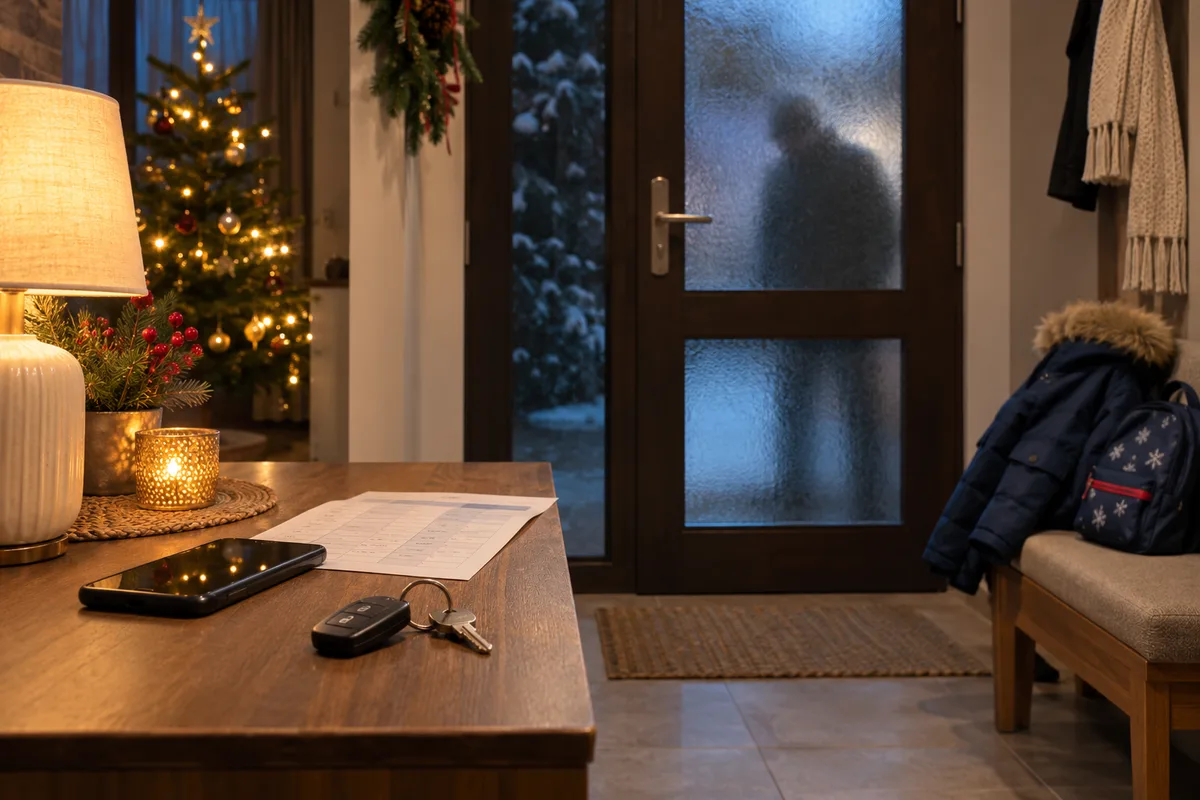
A Christmas handover should be a calm implementation of the family’s arrangements. Sometimes, however, the parent collecting the child speaks indistinctly, has difficulty keeping balance, behaves aggressively or intends to drive. The other parent then has to protect the child while remembering that contact may be governed by a Polish judgment, interim order or court-approved settlement.
There is no single answer for every case. Conflict between parents or distrust alone does not justify blocking contact. A concrete and immediate risk to the child’s health or safety must be assessed differently. The relevant factors are observable facts, a proportionate response and prompt legal action afterwards.
Child safety comes first, but conclusions must be based on facts
Under Article 113 and following of the Polish Family and Guardianship Code, parents and the child have both a right and a duty to maintain contact. Contact is legally separate from parental authority. A court may nevertheless restrict contact or prohibit it where the statutory threshold concerning the child’s welfare is met.
At the door, a parent is not conducting a trial and cannot issue a new contact order. The parent should focus on specific questions:
- What behaviour can I actually observe?
- Is there a smell of alcohol, impaired balance, slurred speech or difficulty communicating logically?
- Is the parent aggressive or unpredictable?
- Does the parent intend to drive with the child?
- Is a sober adult available who could safely provide care or transport?
- What exactly does the existing judgment or settlement say?
Describe observations rather than making a medical diagnosis. “I could smell alcohol, his speech was slurred and he was unsteady” is more useful than the general statement “he was definitely drunk”.
Can the child be withheld from an intoxicated parent?
Where there is a real and immediate danger to the child, a temporary decision not to complete the handover may be assessed differently from deliberate and repeated obstruction of contact. This does not create a general rule that any suspicion of alcohol automatically permits one parent to cancel contact unilaterally.
The intensity of the symptoms, ability to care safely, intended transport, conduct of both parents and the alternatives offered all matter. If contact has been ordered by a court, refusal should be treated as exceptional, its reasons should be documented carefully and urgent family-court steps should be considered. The wider rules for Christmas arrangements are discussed in Child contact at Christmas after separation.
What to do at the door — step by step
- Keep your voice calm and do not argue in front of the child.
- If possible, ask another adult to witness the conversation and the parent’s behaviour.
- Identify the concrete concern: for example, the smell of alcohol, loss of balance or an intention to drive.
- Offer an option proportionate to the circumstances, such as collection by a sober adult, safe transport, contact without driving or another date. Not every alternative will be appropriate in every case.
- If there is an immediate threat to life, health or safety, call 112. The emergency number is not intended to provide legal advice or resolve an ordinary disagreement about contact. Official guidance is available from the Polish Ministry of the Interior and Administration.
- After the event, write down what happened, preserve the correspondence and obtain prompt legal advice.
Quick action table
| Situation | Immediate response | Evidence to preserve | Possible next step |
|---|---|---|---|
| Smell of alcohol, but no aggression and no plan to drive | Establish facts calmly and consider a safe alternative | Witness, messages and a precise note | Review the order and obtain legal advice |
| Clear impairment and no ability to provide safe care | Avoid escalation; protect the child and consider calling the services | Observed symptoms, witnesses and intervention record | Urgent application for interim protection or modification of contact |
| The parent intends to drive with the child | Do not expose the child to an immediate danger; notify the services where the risk is real | Vehicle details, direction of travel and witnesses | Preserve the intervention record and consider family or criminal-law steps |
| The problem repeats | Do not rely only on further verbal arguments | Chronology of incidents and supporting documents | Application to change contact, introduce supervision or another measure |
This table is only an orientation tool. The proper response depends on the facts of the individual incident.
When the parent intends to drive with the child
The greatest risk arises where a person showing signs of intoxication intends to drive away with the child. Do not enter the vehicle and do not try to seize the keys by force if that could provoke a dangerous confrontation. If the risk is real, give the services the location, vehicle description, registration number and direction of travel.
The Police may carry out an alcohol test and assess the situation within their legal powers. The other parent cannot personally compel a breath test. Polish rules on driving after alcohol are explained in Driving After Alcohol in Poland: Offence or Crime, and What to Do After a Check?.
How to document the incident
In later proceedings, organised and reliable material is more valuable than a large number of accusations. Useful evidence may include:
- a detailed note made immediately afterwards, recording the date, time, place and observable behaviour;
- text messages, emails and messenger conversations concerning collection of the child;
- details of adult witnesses;
- the intervention reference and official note if the Police attended;
- medical records if an injury occurred or medical assistance was required;
- existing judgments, settlements and interim contact orders;
- a chronology of earlier similar incidents.
A recording may be relevant evidence, but the lawfulness and proper use of it require case-specific assessment. Do not publish recordings or the parent’s image on social media. A child should not be interrogated, coached to make statements or placed in the role of a witness to the adults’ conflict.
What the Police may do — and what they do not decide at the door
The Police may respond to danger, violence, a breach of public order or suspected drink-driving and may document the intervention. Officers do not replace the Polish family court and do not normally rewrite a contact schedule at the door.
If aggression or domestic violence occurs during the handover, measures under the Polish Act on Counteracting Domestic Violence may also be relevant. This must be distinguished from an ordinary disagreement about the time or manner of contact.
What to do after the incident
A one-off refusal does not solve the future problem. The next step must correspond to the actual risk and the stage of the case. Depending on the evidence, possible measures under Polish law may include:
- an urgent application for interim regulation of contact while proceedings are pending;
- changing the time, place or method of handover;
- contact in the presence of the other parent, a court guardian or another named person;
- prohibiting removal of the child from the child’s permanent residence;
- modifying an earlier decision where the child’s welfare requires it;
- taking steps concerning parental authority where the concern is broader than the manner of contact.
The procedural framework is set out in the Polish Code of Civil Procedure. Contact and parental authority are distinct issues. A single incident does not automatically lead to restriction of parental authority. The conditions are explained in Restriction of parental authority in Poland.
A single incident or a recurring alcohol problem?
The court will consider whether the matter is isolated or forms a repeated pattern. If it recurs, prepare a factual chronology: when contact was due, what was observed, who was present, whether services attended and what safe alternative was offered. Never provoke the other parent or collect evidence at the expense of the child’s safety.
Alcohol dependence or a suspected alcohol problem does not replace an assessment of how specific conduct affects the child. Family proceedings are not intended to punish a parent. Their aim is to protect the child’s welfare and, where it is safe, preserve the child’s relationship with both parents.
Example: collection on Christmas Eve
The following example is fictional.
A father was due to collect his nine-year-old daughter at 2 p.m. on 24 December under a Polish court order. He arrived alone by car. The mother noticed a strong smell of alcohol, slurred speech and difficulty maintaining balance. Her adult sister witnessed the conversation. The father refused to leave the car and announced that he would drive away with the child.
The mother did not argue in front of the daughter. She described the behaviour she could observe, proposed that the child be collected by a sober grandmother and sent a short message confirming the proposal. When the father tried to drive and became aggressive, she called the services. Afterwards she preserved the correspondence, witness details and intervention reference and sought advice on an urgent application concerning contact.
The example does not mean that identical action will be correct in every case. It shows the importance of a calm response, a safe alternative, reliable documentation and prompt legal action.
Documents to prepare for a consultation
- The current judgment, settlement or interim contact order.
- A precise chronology of the incident and earlier similar events.
- Correspondence concerning collection of the child.
- Witness details and intervention reference numbers.
- Information about the intended transport of the child.
- Documents from any pending Polish family proceedings.
- Your proposed safe arrangement for future contact.
Legal assistance in Kraków, Proszowice and Mszana Dolna
An incident during a child handover requires the facts and documents to be organised quickly. Angelika Mazur-Kubowicz Law Office assists with Polish family-law matters in Kraków, Proszowice and Mszana Dolna. Assistance may include reviewing the existing order, assessing whether interim protection is required, preparing an application and representation before the Polish court. The scope of services is described on the Family law page.
Legal position as at 26 November 2026.
This article provides general information about Polish law. It is not a substitute for individual legal advice or a case-specific safety assessment. Where life or health is in immediate danger, contact the emergency services.